
Disclosure: This page may contain affiliate links. If you book or buy through our links, we may earn a small commission at no extra cost to you. See our Privacy Policy for details.
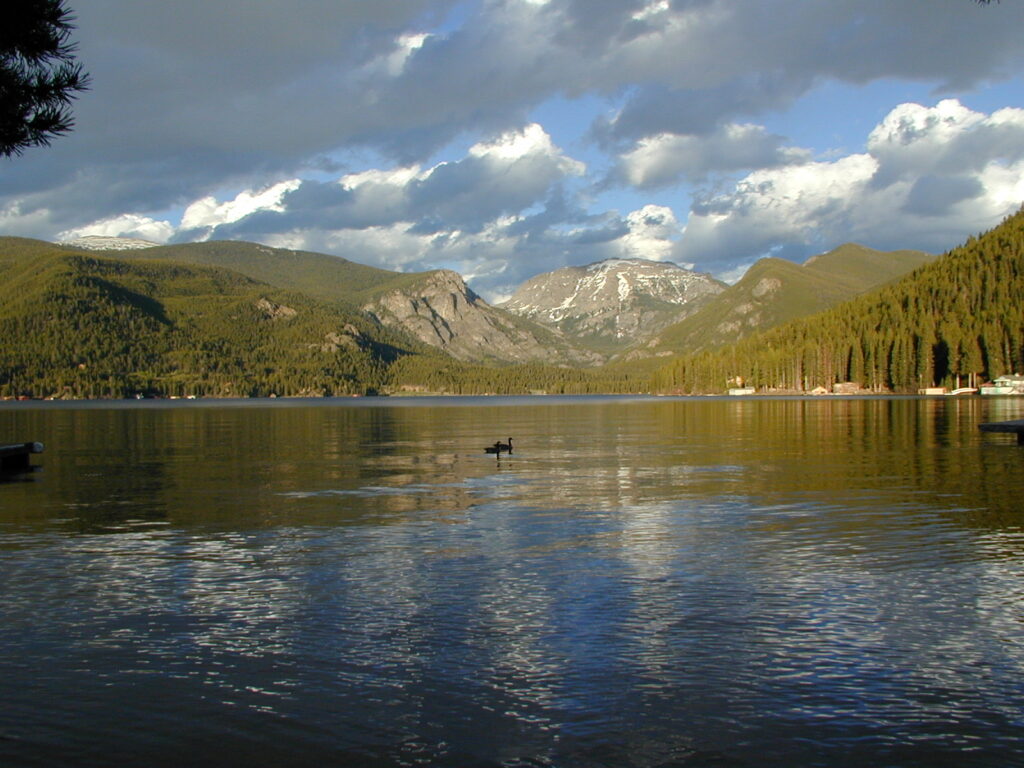
Tucked against the western boundary of Rocky Mountain National Park at 8,369 feet, Grand Lake is the kind of mountain town that earns return visits. It sits on the north shore of Colorado’s largest natural lake, with a historic wooden boardwalk, a compact downtown of independently owned shops and restaurants, and immediate access to some of the best wilderness in the state. Shadow Mountain Lake and Granby Lake adjoin it to the south, forming the largest body of water in Colorado when counted together.
For most visitors, Grand Lake is either the western gateway into Rocky Mountain National Park via Trail Ridge Road, or a quieter alternative base to Estes Park on the park’s east side. It’s less crowded, more affordable, and has a character that feels genuinely old Colorado rather than tourist-built.
Getting to Grand Lake
Grand Lake sits at the junction of US-34 and the western entrance to Rocky Mountain National Park, about 100 miles northwest of Denver.
From Denver: Take I-70 west to US-40 at Empire, then head north through Granby. US-34 north from Granby leads directly into Grand Lake — approximately 1 hour 45 minutes in normal conditions.
From Estes Park: Drive Trail Ridge Road west through Rocky Mountain National Park. The road connects the two towns directly — about 48 miles and 1.5 to 2 hours depending on stops. Trail Ridge Road is seasonal, typically open late May through mid-October.
From Fort Collins: Take US-287 south to Loveland, then US-34 west through the Big Thompson Canyon into Estes Park, then Trail Ridge Road west. Approximately 2.5 hours.
What to do in Grand Lake
Boating and Water Recreation
The lake itself is the centerpiece of the town. Grand Lake is the deepest natural lake in Colorado at 265 feet, and the combination of Grand Lake, Shadow Mountain Lake, and Lake Granby — connected by canals — creates an extensive network for motorized boating, sailing, kayaking, and paddleboarding. The town marina rents watercraft during summer months, and fishing for rainbow trout, brown trout, and kokanee salmon is popular across all three lakes.
Rocky Mountain National Park — West Side
The western entrance to Rocky Mountain National Park is three miles from downtown Grand Lake. The west side of the park is significantly less trafficked than the Bear Lake corridor on the east side, which makes it the better choice for anyone seeking solitude on the trail. The North Inlet Trail and East Inlet Trail both begin near town and push deep into the park’s backcountry — East Inlet leads to Adams Falls at just 0.3 miles, an easy walk suitable for all fitness levels, and continues to Lake Verna for a full-day 13.5-mile round trip.
Timed entry permits are required for the western entrance during summer peak season — check the National Park Service website for current permit windows before your visit.
Rocky Mountain National Park Visitor Guide →
Trail Ridge Road
The highest continuous paved road in the United States begins its eastern descent from Grand Lake’s side of the park. Driving Trail Ridge Road from the Grand Lake entrance offers a different perspective than approaching from Estes Park — the alpine meadows and tundra feel more remote, and the Alpine Visitor Center at 11,796 feet marks the emotional high point of the drive.
Trail Ridge Road Scenic Byway →
The Grand Lake Boardwalk
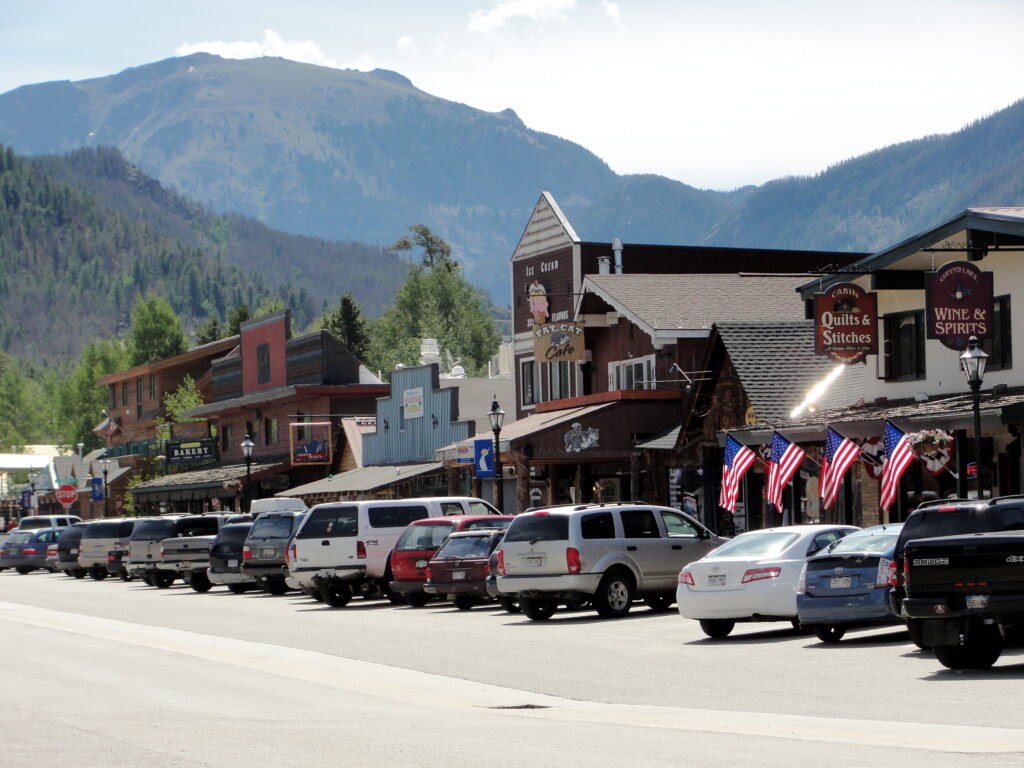
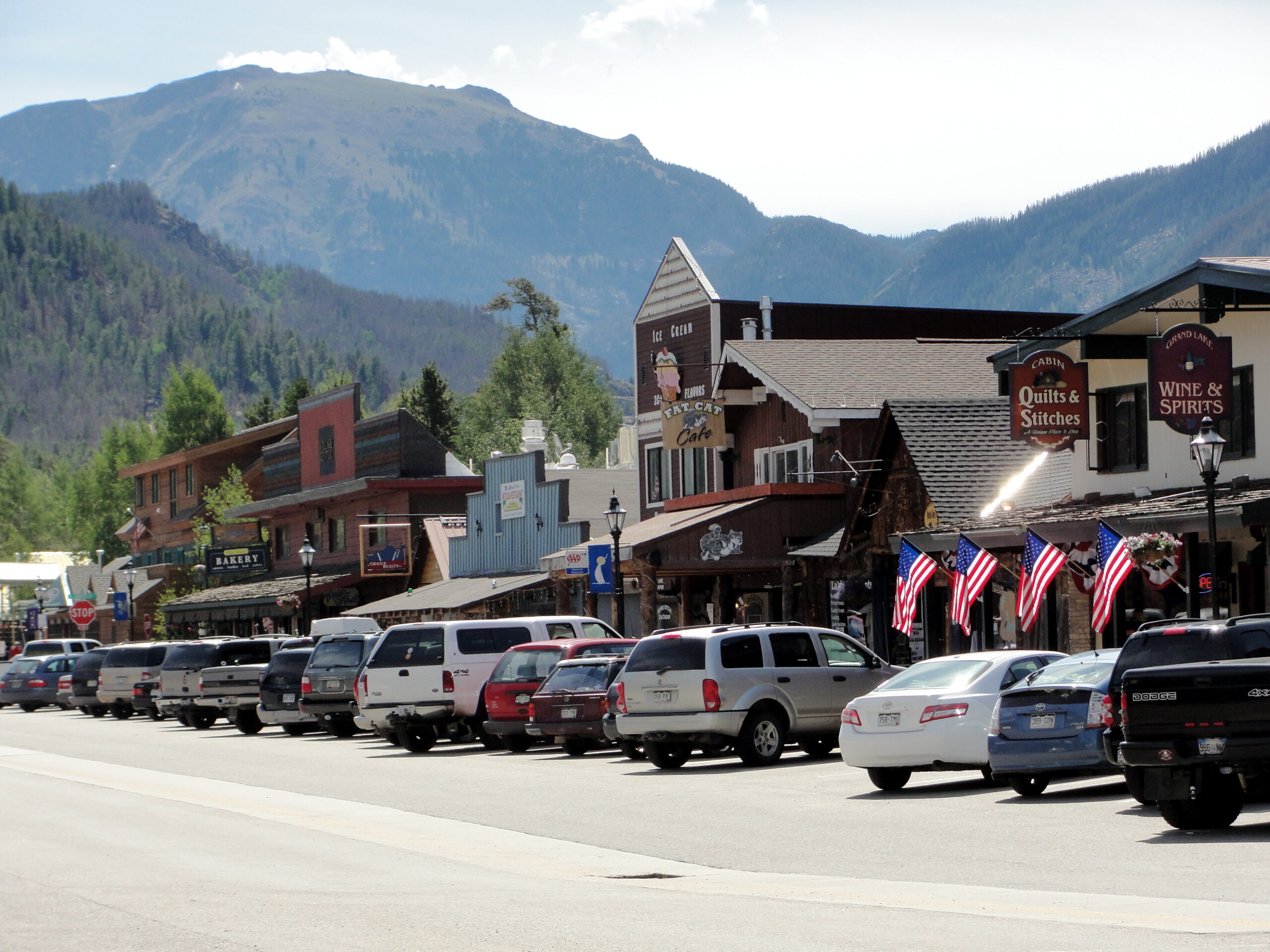
The historic wooden boardwalk along the lakefront is the social spine of the town — a short stretch of independently owned shops, ice cream parlors, a few good restaurants, and outfitters. It’s walkable in 20 minutes end to end and worth doing twice: once during the day for the mountain views across the water, and once in the evening when the light on the Never Summer Range turns.
Hiking Near Grand Lake
Beyond the national park boundary, the Arapaho National Recreation Area and the Arapaho National Forest surround the Grand Lake area with accessible trailheads.
- Adams Falls — 0.6 miles round trip, easy, East Inlet Trailhead inside RMNP
- East Inlet Trail to Lake Verna — 13.5 miles round trip, strenuous, full wilderness day hike
- North Inlet Trail — 12+ miles to Flattop Mountain, moderate to strenuous
- Monarch Lake Loop — 4 miles, easy to moderate, Arapaho National Recreation Area south of Grand Lake
Winter Recreation
Grand Lake is one of the few Colorado mountain towns with a strong winter identity outside of skiing. It sits at the trailhead for a network of snowmobile trails that extend through the national forest — the town bills itself as the Snowmobile Capital of Colorado. Cross-country skiing and snowshoeing are accessible from multiple trailheads near town, and ice fishing on the lake draws a dedicated crowd through February.
Tours & Activities
Explore Rocky Mountain National Park’s West Side
The western entrance to Rocky Mountain National Park is just two miles north of Grand Lake village. This side of the park is significantly less crowded than the Estes Park entrance and offers some of the best wildlife viewing in the region — moose are commonly spotted in the willow corridors along the Colorado River headwaters. Popular west-side trails include the Colorado River Trail, Timber Lake Trail, and the long haul up to Flattop Mountain. Timed-entry permits are required for the park’s busiest areas in summer; check recreation.gov before your visit.
Boating and Kayaking
Grand Lake’s namesake water body is the heart of town life in summer. At nearly 300 acres and 265 feet deep, it’s big enough for sailing, motorboating, and paddleboarding. Shadow Mountain Reservoir and Lake Granby, just to the south, extend the paddling and boating options considerably. Several marinas in town rent kayaks, canoes, paddleboards, and motorized boats by the hour or day.
Fishing
Grand Lake is a serious fishing destination. The lake and surrounding waters are stocked with kokanee salmon, rainbow trout, brown trout, and lake trout. Fishing is productive year-round — including ice fishing in winter, when anglers drill through several feet of ice for kokanee. A valid Colorado fishing license is required; pick one up at local sporting goods shops on the main street.
Snowmobiling
Grand Lake calls itself the Snowmobile Capital of Colorado, and the claim holds up. The town sits at the hub of more than 300 miles of groomed snowmobile trails through Arapaho National Recreation Area and Arapaho National Forest. The season typically runs December through March. Multiple outfitters in town offer rentals and guided tours for riders of all experience levels.
The Grand Lake Boardwalk
The downtown boardwalk along Grand Avenue is worth a slow stroll even if you’re just passing through. Western-style storefronts house galleries, outfitters, ice cream shops, and local restaurants. The Opera House, built in 1901, still hosts performances in summer. It’s one of the most authentically Western main streets in Colorado — unpretentious and photogenic.
Where to Stay
Grand Lake has a range of lodging concentrated around the town center and along the lake’s north shore — from small historic lodges and motor inns to vacation cabins on the water. The cabin and vacation rental inventory is particularly strong here, making VRBO the better starting point for most visitors.
Browse Grand Lake Cabins & Rentals →
When to Visit
Summer (June–August) is peak season — warm days, open trails, active marina, and all shops and restaurants operating. July and August see the most visitors; book accommodations well in advance. Afternoon thunderstorms are common at elevation; plan outdoor activities for mornings.
Fall (September–October) brings cooler temperatures, golden aspen color along the surrounding forests, and noticeably fewer crowds. This is an excellent window for hiking and wildlife viewing. Trail Ridge Road typically closes in mid-October.
Winter (November–March) is snowmobile season. The town is quiet but not shut down — several lodges and restaurants stay open, and the snowmobile trail network is the big draw.
Spring (April–May) is the shoulder season. Snow lingers at elevation, Trail Ridge Road is closed, and some businesses haven’t reopened yet. Not the ideal visit window unless you’re specifically after solitude.
Plan Your Visit
- Timed entry permits for RMNP’s western entrance are required during summer peak season — check recreation.gov for current availability
- Fuel up in Granby if approaching from the south — Grand Lake has one gas station and prices run higher than the valley
- Cell service is limited inside the national park; download offline maps before entering
- Altitude: Grand Lake sits at 8,369 feet — allow a day to acclimatize if you’re coming from sea level before attempting strenuous hikes
- Pets are welcome in town and on the boardwalk; not permitted on RMNP trails