
Disclosure: This page may contain affiliate links. If you book or buy through our links, we may earn a small commission at no extra cost to you. See our Privacy Policy for details.
Why Visit Estes Park, Colorado
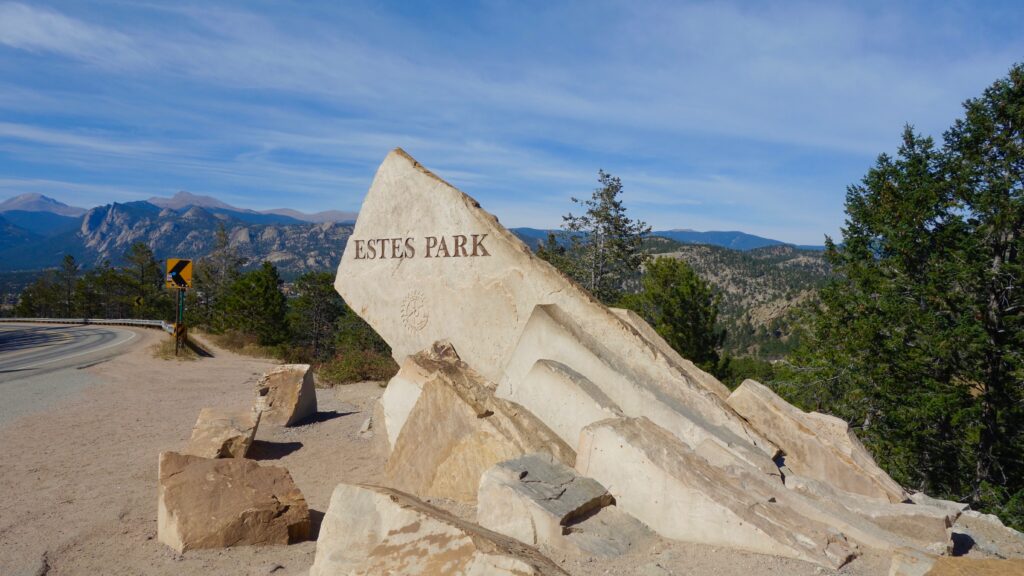
Estes Park sits at 7,522 feet at the eastern gateway to Rocky Mountain National Park, making it one of Colorado’s most visited mountain towns. With a permanent population of around 6,000, it punches well above its weight — world-class hiking, abundant wildlife, a charming downtown, and one of the most famous hotels in America are all within a few miles of each other.
Most visitors use Estes Park as a base for exploring RMNP, but the town itself deserves at least a full day. The Fall River runs right through downtown, elk wander the streets at dusk, and the calendar is packed with festivals from May through October.
Best time to visit: June through August for hiking and wildflowers; September for elk rut and fall foliage with smaller crowds; December through March for a quiet, snowy escape.
Things To Do in Estes Park
Explore Rocky Mountain National Park
The main draw. RMNP covers 415 square miles and receives over 4 million visitors a year — for good reason. Trail Ridge Road, the highest continuous paved highway in the US, crosses the park at over 12,000 feet with views that stop you in your tracks. Popular hikes include Bear Lake, Emerald Lake, and the Sky Pond trail.
Tip: A timed entry permit is required to enter the park between May and October. Book at recreation.gov as soon as your trip is confirmed — they sell out weeks in advance. For a full breakdown of hikes, fees, and camping, see our Rocky Mountain National Park visitor guide.
Watch Wildlife in Town
Estes Park has one of the most accessible urban wildlife experiences in Colorado. Elk herds routinely wander into town, especially at dawn and dusk along the Fall River corridor and MacGregor Avenue. September and October bring the elk rut — bulls bugling at each other is one of the great wildlife spectacles in the American West and it happens right on the edge of town.
Mule deer are a daily sighting downtown. Black bears occasionally pass through in fall. Stay respectful — maintain at least 75 feet from elk and never approach wildlife, however tempting.
Visit the Stanley Hotel
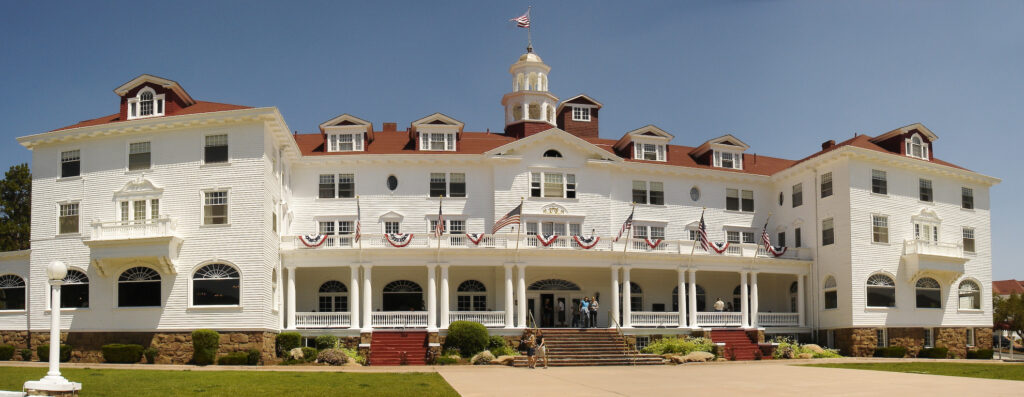
Built in 1909 by F.O. Stanley (of Stanley Steamer fame), the Stanley Hotel is one of the most recognizable buildings in Colorado. Stephen King stayed here in 1974 and was inspired to write The Shining. The hotel offers daily ghost tours, a rooftop bar with mountain views, and weekend concerts in the ballroom.
You don’t need to be a guest to visit — tours run daily and the restaurant and bar are open to the public. If you want to stay, book well in advance; it fills up fast and rates reflect its iconic status ($200–400+/night).
Explore Downtown Estes Park
The compact downtown along Elkhorn Avenue is walkable and genuinely charming — taffy shops, outdoor gear stores, art galleries, and Colorado-made goods. The Estes Park Aerial Tramway runs from Memorial Day through Labor Day, lifting visitors 1,124 vertical feet to Prospect Mountain for panoramic views of the town and park.
The Estes Park Museum (free admission) covers the town’s history from its Arapaho roots through the Stanley era. Worth an hour on a rainy afternoon.
Fish the Big Thompson River
The Big Thompson River running through town and the Cache la Poudre upstream offer solid fly fishing for brown and rainbow trout. Several outfitters in town offer guided half-day trips — ideal if you’re new to Colorado fly fishing or want to know the best holes. GetYourGuide has bookable guided fishing experiences in the area.
Attend a Festival
Estes Park’s event calendar is one of the best of any small Colorado town:
- Scandinavian Midsommar Festival (June) — Nordic heritage celebration, surprisingly fun
- Rooftop Rodeo (July) — one of Colorado’s oldest rodeos, held annually since 1908
- Longs Peak Scottish-Irish Highland Festival (September) — the biggest event of the year, drawing 15,000+ visitors for Celtic music, athletics, and whisky
- Elk Fest (October) — celebrates the elk rut with bugling contests, Native American dancing, and guided wildlife walks
Hiking Near Estes Park
Most of the best hiking is inside RMNP, but there are accessible trails right from town:
Gem Lake Trail (3.4 miles round trip, moderate) — starts at the Lumpy Ridge Trailhead north of town, ends at a granite-rimmed lake with excellent views. One of the best half-day hikes accessible without a park permit.
Lily Mountain Trail (3.8 miles round trip, moderate) — south of town off Highway 7, panoramic summit views of RMNP and the Continental Divide. No permit required.
Twin Sisters Peaks (7.4 miles round trip, strenuous) — a serious hike to 11,428 feet with 360-degree views. No permit required, but bring layers — it gets cold fast at the top.
Inside RMNP: Bear Lake Loop, Emerald Lake, Sky Pond, Chasm Lake, and Longs Peak (14,259 ft) are the headline hikes. See our complete Estes Park hiking guide for details on each.
Where to Stay in Estes Park
Estes Park has lodging for every budget, from basic motor lodges to the iconic Stanley Hotel. Book early for summer — the town fills up fast, especially on weekends from June through September.
Budget ($60–120/night): Motel chains like Big Thompson Motor Lodge and Murphy’s River Lodge offer clean, no-frills rooms close to downtown. Search budget hotels on Hotels.com
Mid-range ($120–200/night): The Estes Park Resort and Black Canyon Inn are popular picks with river access or mountain views. Check availability on Hotels.com
Upscale ($200–400+/night): The Stanley Hotel is the iconic choice — historic, haunted, and genuinely stunning. The Estes Park Marriott is a reliable splurge with a full spa. Browse upscale options on Hotels.com
Vacation Rentals: Cabins and mountain homes are ideal for families or groups — many have full kitchens, hot tubs, and direct mountain views. Off-season (November–April) runs 30–40% cheaper. Browse Estes Park vacation rentals on VRBO
Prefer camping? RMNP’s campgrounds are just minutes from Estes Park and require advance reservations during peak season. The Estes Park KOA has hookups and cabins if you need a backup.
Nearby Campgrounds
- Moraine Park Campground Reserve on Recreation.gov →
- Glacier Basin Campground Reserve on Recreation.gov →
- Aspenglen Campground Reserve on Recreation.gov →
- Timber Creek Campground Reserve on Recreation.gov →
Getting to Estes Park
From Denver: 1.5 hours via US-36 through Boulder — the most scenic approach, passing through Boulder and into the foothills.
From Denver International Airport: 1.75 hours. Take I-70 west briefly then US-36 north through Boulder.
From Fort Collins: 45 minutes via US-34 (the Big Thompson Canyon route) — dramatic canyon drive, occasionally closes in winter due to rock slides.
Parking in Estes Park: Downtown parking is free but limited in summer. The town operates a free shuttle (the Estes Transit) that runs from park-and-ride lots on the edge of town — use it on busy summer weekends to avoid circling for an hour.
Inside RMNP: The park has its own free shuttle system connecting major trailheads from late May through mid-October. Bear Lake Road is often closed to private vehicles on summer mornings — the shuttle is your only option and honestly a better experience.
Visitor Tips
- Altitude: Estes Park sits at 7,522 feet. If you’re coming from sea level, take it easy the first day — headaches and fatigue are common. Drink extra water and avoid heavy alcohol your first night.
- Weather: Mountain weather changes fast. Even in July, afternoon thunderstorms are common above treeline. Always carry a rain layer on any hike over 3 hours.
- Wildlife safety: Never approach elk, even in town. Bulls during the September rut are unpredictable and dangerous. Keep 75 feet minimum distance.
- Cell service: Spotty inside RMNP. Download offline maps (Google Maps or AllTrails) before you leave town.
- Shoulder season value: May, early June, and October offer 20–30% lower hotel rates, smaller crowds, and often better wildlife viewing than peak summer.
Related Pages
Rocky Mountain National Park — Complete Visitor Guide
Camping in Colorado — Best Campgrounds Near Estes Park
Peak to Peak Scenic Byway
Grand Lake, Colorado — Gateway to the West Side of RMNP
Hiking in Estes Park
Best Lakes Near Estes Park, Colorado
Best Things to Do in Estes Park, Colorado